How to Improve Indoor Air Quality in Your Home: Essential Tips
Indoor air pollutants reach levels up to five times higher than outdoors, which makes indoor air quality more significant than ever before. People spend roughly 90 percent of their time indoors, exposing themselves to these concentrated pollutants, according to the Environmental Protection Agency. This emphasizes the importance of indoor air quality improvement for our overall health and well-being.
The air quality inside homes often presents a greater health risk than outdoor air pollution. Studies show organic pollutant levels climb two to five times higher indoors compared to outside air. Some household activities can cause these levels to surge dramatically – up to 1,000 times higher than outdoor background levels. This stark contrast between indoor and outdoor air quality highlights the need for effective indoor air pollution solutions.
Here, we offer practical solutions to enhance your home’s air quality. You’ll discover room-specific improvements and seasonal adjustments, along with advanced purification methods that create a healthier living space. By implementing these strategies, you’ll learn how to clean the air in your home and create a safer environment for you and your family.
Room-by-Room Air Quality Guide
Your home’s rooms face different air quality challenges. Bathrooms have moisture problems, and humidity levels go beyond what experts recommend. You need an exhaust fan that’s rated at 50 CFM for bathrooms under 45 square feet. Larger spaces between 46-75 square feet need 70-80 CFM fans to curb excess moisture and improve air circulation.
Kitchens need extra care because cooking creates multiple pollutants, including particulate matter and volatile organic compounds. A gas stove’s nitrogen dioxide output can exceed EPA outdoor standards in minutes. Both gas and electric cooking create ultrafine particles that harm breathing. Running your exhaust fan during cooking and 30 minutes after helps cut these pollutants and reduce indoor air pollution.
Bedrooms need special attention since we sleep there about eight hours each day. Better airflow leads to improved sleep and next-day performance. Students’ sleep quality improved when their bedroom’s CO2 dropped from 2,395 ppm to 835 ppm. Their thinking skills got better too. To improve air quality in bedroom spaces, consider using air purifiers and ensuring proper ventilation.
Room temperature is a vital part of bedroom air quality. Research shows people fall asleep faster with comfortable temperatures and good proper ventilation. HEPA filter air purifiers can trap 99.95% of ultrafine particles, including dust mites. This creates cleaner air while you sleep and helps reduce respiratory symptoms.
Good ventilation, filtration, and moisture control that targets each room’s needs will make your home’s air healthier. By addressing the specific challenges in each area, you can significantly improve the overall air quality in your home.
Seasonal Air Quality Solutions
Each season creates its own set of challenges for indoor air quality. Summer brings high humidity that creates perfect conditions for mold and allergens to thrive. Air conditioning alone won’t solve the problem. You’ll need dehumidifiers to keep humidity levels between 40-60%, which is crucial for humidity control and preventing the growth of harmful microorganisms.
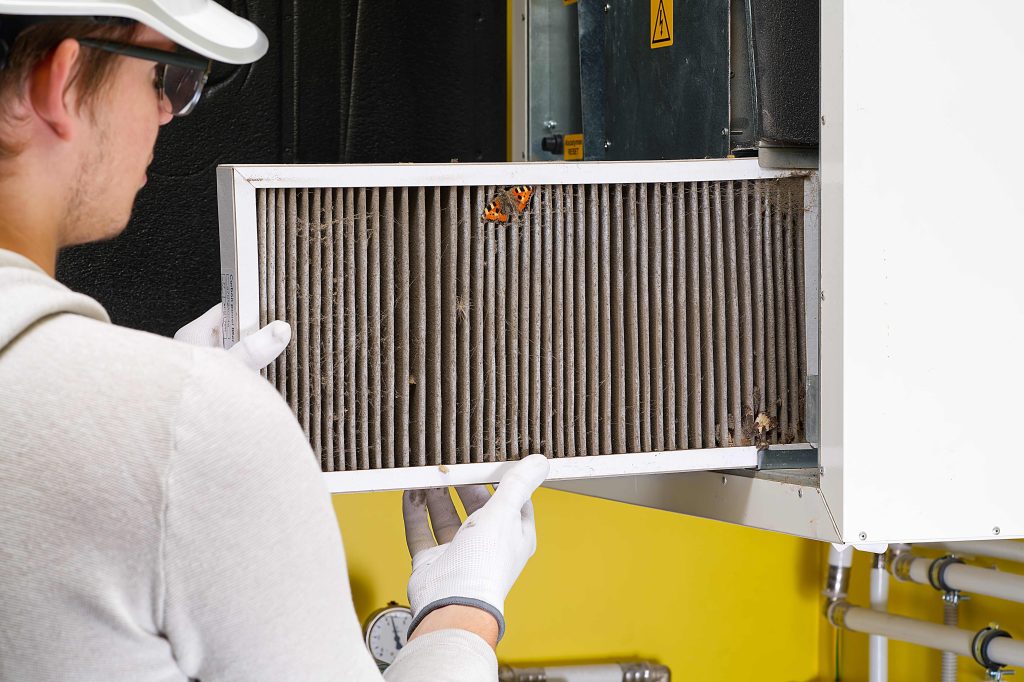
Fall makes air quality management trickier as homes get sealed up against cooler temperatures. Decaying leaves boost allergen levels while heating systems push around built-up dust and combustion products. Your best defense is scheduling HVAC maintenance before winter hits to ensure your system is clean and functioning efficiently.
Winter makes ventilation especially challenging since homes stay sealed tight to keep warmth inside. Opening windows might seem wrong during cold weather, but quick five-minute air-outs can refresh your indoor air without making your home too cold. Heat recovery ventilators (HRVs) or energy recovery ventilators (ERVs) work even better – they can save up to 80% of the heat from outgoing air while providing fresh air intake.
Spring’s pollen can easily sneak in through open windows. Here are some ways to improve air quality during this season:
- Install HVAC filters with MERV ratings between 8-13 to trap allergens and particulate matter
- Run exhaust fans in kitchens and bathrooms where moisture builds up
- Keep indoor humidity between 30-50% to stop mold growth
- Use window or attic fans on nice days for natural ventilation
Extra ventilation becomes crucial during high-pollutant activities like painting, cooking, or running kerosene heaters. These activities can release volatile organic compounds and formaldehyde into your home’s air. This season-by-season strategy will keep your home’s air clean all year round and help reduce the health effects associated with poor indoor air quality.
Advanced Air Purification Methods
Air purification technologies have made huge strides, giving us better ways to clean indoor air. HEPA filtration is the life-blood of modern air cleaning, as it catches 99.97% of particles as small as 0.3 microns. These filters use several methods to trap particles through impact, interception, and diffusion.
HEPA filters excel at removing:
- Bacteria and viruses
- Dust and pollen
- Pet dander and mold spores
- Smoke particles and other forms of particulate matter
UV-C technology has become a great way to purify air. Light at 254 nanometers breaks down airborne pathogens by destroying their DNA structure. The combination of HEPA filtration with UV-C creates a ‘double-barrier’ system that boosts air purification results and contributes to overall air quality improvement.
Your entire HVAC system becomes a whole-house air purifier with in-duct purification systems. These systems keep AC coils free from organic toxins and boost system efficiency. This could mean lower energy costs. The best in-duct systems use both UV technology and filtration to clean air throughout your home, effectively addressing indoor air pollution.
Air purifiers need to cycle through room air 4.8 times per hour to work well. ENERGY STAR certified models are a smart choice since they work 27% more efficiently than standard units. You should carefully pick UV air purifiers because some models produce ozone – which can be harmful and contribute to poor indoor air quality.
Simple Ways to Improve Indoor Air Quality
Clean indoor air affects our health and well-being directly. We spend most of our time inside our homes, so we need specific solutions for each room. The right mix of seasonal adjustments and advanced purification methods gives us the best approach to maintain quality air and reduce the risk of respiratory symptoms.
Good ventilation in bathrooms and kitchens are the foundations of healthy indoor air. You need to manage humidity levels and maintain HVAC systems as seasons change. HEPA filtration and UV-C purification add extra protection against airborne pollutants, including radon and carbon monoxide.
You can create a healthier indoor environment with consistent care and the right mix of solutions. ACE Air Conditioning & Heating Service has served Northern Virginia families since 1980. We provide quality equipment and technical services to meet the heating, cooling, and indoor air quality needs of residential properties.
Your family’s health improves when you take steps to enhance indoor air quality. Start with basic steps like proper ventilation and regular maintenance. You can add advanced purification methods based on what you need later. Don’t forget about the power of indoor plants, which can naturally filter certain pollutants from the air.
Here are some additional ways to improve air quality in your home:
- Use natural cleaning products to reduce exposure to harsh chemicals
- Avoid smoking indoors to eliminate secondhand smoke
- Regularly clean and vacuum to reduce dust and allergens
- Consider air quality testing to identify specific issues in your home
- Address any combustion sources, such as gas stoves or fireplaces, to prevent the buildup of harmful gases
By implementing these strategies and being mindful of potential pollutants, you can significantly improve your home’s air quality, creating a healthier living environment for you and your family. Contact us today to learn more about how we can improve the indoor air quality in your home.
FAQs
What are the most effective strategies for improving indoor air quality?
The most effective strategies include source control (eliminating or reducing pollutant sources), improving ventilation, and using air cleaners or filtration systems. Additionally, maintaining proper humidity levels and regularly cleaning your living space can significantly enhance indoor air quality. Using indoor plants and natural cleaning products can also contribute to better air quality.
How can I improve air quality in specific rooms of my house?
For bathrooms, install exhaust fans to control moisture. In kitchens, use exhaust fans during and after cooking to remove particulate matter and combustion byproducts. For bedrooms, maintain proper ventilation and consider using air purifiers with HEPA filters. Ensure each room has adequate airflow and is regularly cleaned to reduce pollutants like dust mites and volatile organic compounds.
What seasonal adjustments should I make to maintain good indoor air quality?
In summer, use dehumidifiers to control humidity. During fall, schedule HVAC maintenance before winter. In winter, use short ventilation bursts or consider mechanical ventilation systems. For spring, install high-efficiency HVAC filters to combat increased pollen levels. Adjust your approach each season to address specific air quality challenges, including managing radon levels and controlling indoor humidity.
Are advanced air purification methods worth investing in?
Yes, advanced methods like HEPA filtration and UV-C technology can significantly improve indoor air quality. HEPA filters can remove 99.97% of particles as small as 0.3 microns, while UV-C light can neutralize airborne pathogens. These technologies, especially when combined, provide powerful solutions for cleaner indoor air and can help reduce the presence of formaldehyde and other harmful substances.
How often should I take action to improve my indoor air quality?
Improving indoor air quality should be an ongoing process. Daily actions like proper ventilation and regular cleaning are essential. Weekly tasks might include changing air filters, while seasonal adjustments and annual HVAC maintenance are also crucial. Regular air quality testing can help you monitor progress and identify areas for improvement. Consistently implementing these practices will lead to better health outcomes for you and your family by reducing exposure to indoor air pollutants and improving overall air quality in your home.


